Archaeology is not an exact science. It is full of doubts, uncertainties, surprises, and unanswered questions. One of its unsolved mysteries concerns the seemingly impossible methods of ancient stonework, skills lost in the mists of time. All existing stones, listed in theMohs Scaleaccording to their hardness - from the 1st degree (softest, talc), to the 10th (hardest, diamond) - are workable with tools made of something harder than them. This means they are worked and altered with a mineral tool with a higher degree of hardness, or more often with a metal tool.
From the 1st to the 6th degree (mostly calcareous stones), copper orbronze toolsare enough. But for stones from the 7th upwards (much harder and mostly siliceous,such as diorite, granite, and porphyry) we need iron or steel tools. In this article, we are interested in the examples of how ancient stoneworkers worked the oldest, hardest stones. How could ancient people manipulate such tough materials with only copper, bronze, or stone tools? The answer might not lie in advanced machinery or extraterrestrial intervention, but in a brilliant, lost understanding of chemistry: the use of highly corrosive plant extracts to literally melt the stone.
Why the Hardest Stones?
Many of these finds date back to periods or geographical contexts where iron did not exist: i.e. in theOld Worldbefore 1200 BC and in the New World before the Conquest. Nevertheless, surprisingly, just the hardest stones were used by ancient peoples in those situations - and with great skill and extremely sophisticated workmanship. Indeed, it seems that they were even preferred, despite the difficulties in working them (during which, moreover, they can chip badly). It was as if shaping them was commonplace for the ancient stonemasons.
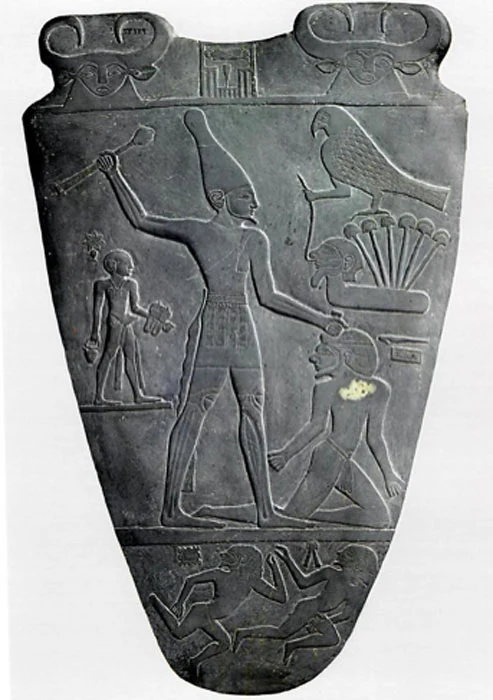
We have emeralds, quartzes,obsidianjewels, and amulets with very fine incisions and carvings; slender vases in syenite with very thin sides with a smooth, impeccable finish; the cup ofKing Narmer, in porphyry; diorite tablets with bas-reliefs on a perfectly smooth background, and long texts in minute hieroglyphic orcuneiformcharacters, traced with perfect graphics, without smudges, as if they had been stamped rather than carved.
And then there’s the disquieting geometries in diorite of Puma Punku, of maniacal rigor and the incredible puzzles of thePeruvian walls(andEgyptianand Japanese walls too), with millimeter-precision junctions between the immense andesite blocks with 20, 30, or even 40 corners. There’s also basaltic boulders three meters high as the grandiose Olmec heads. The 70-ton granite blocks with very clear cuts, that were emptied to create the sarcophagi of the Serapeum of Saqqara, whose even the internal surfaces are as smooth as the outer ones, are another marvel. The shiny cylinders of ‘carrots’ also appear to be dug into granite by drills that seemed to have been as fast as their modern counterparts.
All this work was done by ancientstonemasonson hard siliceous rocks - up to the 8th or 9th degree of the Hardness Scale.
They made vases with smooth finishes and bas-reliefs without smudges, as if they had been stamped rather than carved. (Heagy1 /CC BY-SA 4.0)
None of this, in theory, was feasible by just muscular strength and with the ancient tools in the archaeological record. The stone workers apparently manipulated hard stone with a high degree of skill – but they were without strong saws, bits, special steel drills, and motor-powered tools. It simply seems impossible. But how did they do it? With what?
Inferences and Theories
Obviously, that inexplicable technical perfection has generated a lot of inferences and theories of every kind, many of which arbitrarily transpose means, methods, and knowledge of today into the most distant past. We see a hypothesis suggesting stone was ground, mixed with water, and cast into molds (with a disproportionate expenditure of energy). In another one, the stone is said to be softened by a mix of sour plant juices and shaped, then it would harden.
Other suggestions say the ancient people used lasers, radioactivity and so on, or that they had very advanced machines provided by a mysterious lost civilization. And, of course, there’s the hypothesis that the work was done with the assistance of aliens. But no evidence has ever been found for such devices.
To this technological enigma, excluding fanciful speculations, I intend to offer an explanation in line with ‘Occam's razor’: with all factors being equal, the solution to a problem is the simplest one.
Using Acid to Work the Hardest Stones
The thesis is that the only practical system available to act on the mentioned minerals, refractory to (or unmanageable by) physical action, was chemistry - specifically exploiting the natural capacity of certain elements to break down other materials due to their incompatibility; incompatible chemical principles put in contact with each other will react by destroying each other. That is, to cause a guided reaction, and to stop it at the right time: the stone would be disintegrated by treating it with a corrosive substance (one incompatible with it) that chemically attacked it, instead of, or before tools were used on it.
In short, anacidicchemical would do most (or part) of the work necessary to produce the desired effect – all while saving time, effort, and material. This, as we shall see, was entirely within the reach of theancient craftsmen, even if it is not clear how they came to understand that natural phenomenon and its possible advantageous uses.
The fact is that this intuition was, apparently, operatively implemented, and in a very simple and not at all mysterious way. Because - unlike other proposed solutions - the acid does not change the structure of the stone, but literally liquefies it and, if carefully managed, it can eliminate from a block all the superfluous parts (or materials) not included in the project design.
- Why Archaeology Is So Much More Than Just Digging
- Ten Unsolved Ancient Archaeological Mysteries
- 2.8-Billion-Year-Old Spheres Found in South Africa: How Were They Made?
Acid-Washed Stone - a common treatment to show the beauty of a stone without cutting and polishing. (cobalt123 /CC BY-SA 2.0)
The difference compared to manual tools is that it does it without friction – it’s done at theatomic level. That's all.
We have both direct (material) and indirect (immaterial) clues of the reliability of this hypothesis.Direct clues are the concrete evidence of the use of that method in artifacts and buildings. The results of the process described above are stunning when they are observed with the naked eye.
But I have no doubt that when they are enlarged under a microscope they would show the uniformity of a ‘controlled dissolution’ made by an acid even in the hardest parts of the stone to reach. This is in contrast to scratches which would have been made by metal tools. As a ‘chemical chisel,’ acid can creep everywhere.
As I said above, there is no archaeological evidence for modern technologies and tools used in the ancient past. But acid has always existed in nature. If we wanted to, we could still use it today.
With it, we could - drop by drop - engrave and pierce precious stones, create the empty cavity of a vase and smooth its sides, model statues, and even make coffins out of huge granite blocks. Layer by layer the acid would consume the inside of the stone and smooth it; or, if we wanted to mark it instead, we could cover it with a film of wax (which doesn’t react to it), scratch away the wax in areas we wanted to mark the stone, and then pour acid on those areas.
This could explain howMosesengraved the Tables of the Law, as theBabylonian Talmud, Sotah 48b,describes how Shamìr is used to cut stone. To write on stone at that time, it would make sense that Moses used the same method of first marking the letters with ink, then passing Shamìr over them, and then they were engraved.
Did Moses engrave the Tables of the Law with acid? (James Steidl/ Adobe)
By penetrating natural fissures with acid, we could remove boulders from their rocky bed and cut them as we wish. And maybe we could use it in the building industry in the form of a corrosive paste or mortar which disappeared after having eaten away the roughness and smoothed away the differences in height between boulders. It would eliminate the space needed for joints and give the structure the appearance of a dry-stone wall.
I believe this was the only way that it was possible for the ancient stonemasons to work very hard silicon-based stones. It would also be used for softer stones like limestone, marble, and alabaster, since the same acid also attacks all other types of stone. Indeed it attacks every material exceptgold, lead, and wax.
For us, it is important because it is the only natural solvent forsilicon– and that aspect allows us to identify it with certainty because there is nothing else capable of so much. It ishydrofluoric acid(chemical symbol HF), one of the most aggressive, extremely reactive, caustic, and poisonous chemicals. The ancient stonemasons used that. That was their secret tool.
Sourcing the Secret Stonework Tool
But how did they get it? What did they extract it from?
Indirect clues will indicate its origin. Ancient legends speak of a magical ‘something’ that could weaken or destroy every type of stone: a ‘something’ that, from time immemorial, was reserved for the mighty ones and unknown to everyone else. But at a certain moment, it was replaced by iron, abandoned, and eventually forgotten. That’s how things happened in the Old World at least; in theNew one, history handed it over to oblivion.
There isn't much to tell though.
There is a transient reference to the ‘farr’ ofPersian king Zal,which was a symbol of his celestial investiture, which acted as HF. Another, no less scanty reference mentions an obscure ‘plant mixture’ conceived by Egyptian scholars to soften stone. This was perhaps the same ‘unknown cement’ that was thick as a sheet of paper and that the Arab scholar Abd el-Latif (12th century) said connected the stones of the Great Pyramid, in which some ‘plant residues’ have recently been found. This is all from Egypt, although there traces of the technique abound.
Instead, we find a lot of data (certainly from Egyptian sources) in myths and texts, including the Bible, of ancient Israel, however there this discovery - a gift of God, which later disappeared - was only used twice. The Jews called it Shamir.
Was an unknown cement used in the construction of the Great Pyramid? (primavera108/ Adobe)
Shamír
The first time Shamir was used was to engrave the Tables of the Law and the names of the 12 tribes on the gems of priestly vestments. The second time was to cut the stones of the Temple of Solomon as God commanded: these were calcareous stones, but the gems were almost all siliceous, which confirms that Moses used hydrofluoric acid - Shamìr.
The description of its appearance is rather vague and ambiguous, but its behavior isn’t. It worked the hardest stones and left perfect, smooth, residue-free surfaces; it had to be kept in a lead basket (an airtight vase would have exploded), and insulated with wool and bran; it had heavy collateral effects (it scalded Moses and poisoned and killed the Temple workers); in the long run it became inactive.
This is the unequivocal picture of the action of that powerful acid, but it does not help us to understand its origin and nature.
Excluding that it was, as hypothesized, mineral (diamond) or animal (worm), maybe it was plant-based?Some writings related to Shamìr warn not to identify it with Euforbia, a stinging shrub; but why would they do that, if not because it was also a plant? And unfortunately, the information stops there.
Connecting Shamír and the Pito of Peru
But the astonishing answer comes, unexpectedly, from distant Peru, where oral tradition says ever since the ‘ancients’ started to assemble the stones of their huge walls, they used the mysterious Pito, a plant that was described as a low creeping grass with red leaves.
The tradition affirms that Pito or, rather, its extract, is capable of melting every stone (the explorer Percy Fawcett talks about an amphora stolen from an Inca tomb, incidentally broken, and of how the liquid leaked out and dissolved the stone below) and iron too. It also declares that - as God had given Israel Shamir to work on the Temple - the local gods had once given men, in order to alleviate their labors, two plants: coca and Pito; not to be confused, however, with the caustic Efedra. Does it remind us of something?
Archaeologists still argue as to how the precise stonework found in places such as Cusco in Peru was achieved. (CC BY 2.0)
Jewish myths mention a wild rooster that used Shamìr to make many small holes in rocks in which to plant trees. In Peru they also associate Pito with a bird which, according to several witnesses, is accustomed to rubbing the leaves of the plant onto rocks with its beak: this softens the stone, in which then it digs itself a nest.
But there's more. The wild rooster also used Shamìr to erode the glass slab placed upon its nest covering its little ones and the Peruvian bird did exactly the same with the Pito herb, but that slab was made of iron.
These similar narratives cannot be pure coincidence. In different contexts, these birds are apparently using two distinct corrosive chemical agents which act in exactly the same way in the stories. So, on both sides of the ocean, we have two elements with common characteristics and the same range of action: the unique capacity to attack silicon.
And now everything can be reduced to a simple syllogism: if two factors have the same effect on a third, it means that they are equal. Even the legends tell the same story. In short, the active component of Pito and Shamìr was the same.
Moreover, from the descriptions we have established that Shamir was HF and that Pito was a plant; therefore HF was derived from a plant. Ultimately both those substances - Pito and Shamìr - were actually only one with the same formula: hydrofluoric acid, HF, which was extracted from plants. However, they were probably not of the same species because the same plants do not grow in the two geographical areas.
But it is also true that over 40 plants of various species have high contents of the poisonous HF, which they absorb from soil and synthesize, to protect themselves from herbivores, in the form of a compound called fluoroacetic acid.
And to extract hydrofluoric acid from fluoroacetic acid is no more difficult than to make tea: you just have to boil the plant in water, distill the solution, and then concentrate it. HF dissolved in water is manageable, very carefully, at room temperature.
Shamìr/Pito: Continents Apart, Techniques in Common
At this point it is relevant to identify Shamìr and Pito with the richest HF spontaneous plants.
The most probable suspects are Dichapetalum in Africa and Palicourea in South America (coincidentally, the areas of our interest). Both of them are not very attractive and of little economic value, having no known uses (only as a rat poison for Dichapetalum). Today they are not the object of any particular attention.
But, in the mists of time, the discovery of their special virtue, exploited in various ways according to their availability and needs, enabled the first civilizations to create and advance in epigraphy, sculpture, and architecture.
In Peru and Bolivia, where Palicourea abounds, it was used directly and in abundance in the pre-Inca building industry. In Egypt and outside Africa, I believe that only the acid derived from Dichapetalum was used to carry out smaller, expensive works.
- New Analysis Proves Most If Not All Bronze Age Iron Came From Space
- People of the Arctic worked meteorite iron 1,200 years ago
- New Insights into Rapid Advance in Human Innovative Thinking
Dichapetalum plant. (Vinayaraj /CC BY-SA 3.0)
Who by, where, and when that precious resource was identified is not known and the "how" is perhaps trivial. Maybe the ancient peoples really noticed what the birds were doing or they saw the action of the plants themselves. Regardless, ancient craftsmen learned from experience, and, as they had learned to use fire, water, and wind energy, they also discovered plant or animal juices that melted stones, healed, or killed. They observed that strength, realized its potential, and put it to good use.
Yet the real mystery is not how that knowledge was acquired, nor who transmitted it to whom, but how it traveled between such distant continents. Because, if it is impossible to believe in a coincidence like that shown by myths, it is equally impossible to understand its path unless we rethink the past on very different terms. But this is another story to be investigated elsewhere.
I wish I could demonstrate the validity of this hypothesis by giving it proof and concrete and irrefutable evidence. Modern science can do it. I would like those who have asked the same questions about these mysteries to join me in this research and finally give credit to the skills and knowledge of those who preceded us.
Top image: Are Shamir and Pito the answer to how people performed ancient stonework? Are they the “green chisel” gifted from the gods? Source:Anjocreatif/ Adobe.
This article was first published in June 2019 and updated by an Ancient Origins Editor.
- Shamir
- Pito
- hydrofluoric acid
- solomon
- moses
- pyramid
- stone
- stonework
- acid
- used
Lia Mangolini
Comments
Melting Stone With Plants: The Chemical Secret Behind Impossible
I propose another idea- which is that the very ancient monuments we cannot explain or replicate the construction of were created by Almighty God, the Creator of our Earth etc as has always been known to anyone not financially invested in making a living out of peddling daft ideas. The same energy that manifests as visions of anything we see- because there are NO hallucinations, that inspires our dreams and drives everybody crazy with sightings of UFOs, and which levitates our physical bodies on occasion made these impossible structures everywhere, again to inspire us to create our own styles of architecture and develop our own building skills. Unfortunately, as in Egypt people assume quite wrongly that the pharoahs and tens of thousands of labourers worked very hard in temperatures that are unbearable to work in to build the Pyramids etc, rather than having the good sense to occupy them and use them as temples to the Deity that created them, and no we have hoards of people with degrees using their qualifications to muddy the waters, rather than actually use, Lia Mangolini, the rest of their lives finding out that these plant-based acids would not be useable in such conditions, even if they did work, as evaporation occurs faster that the stone melting. But, by all means do go to these sites and then organise the production of the acids, and see what you can do !
40+ plants
Is there a link to be able to find the 40+ plants that naturally contain HF? I'm trying to identify any that might be in my area of North America so I can experiment with them.
The mystery goes away when
The mystery goes away when the timelines are lengthened. Steel implements will rust and disappear over thousands of years, while non-ferrous metal objects will not. The aboriginal stone mason/metal forging culture was likely destroyed upon the sudden onset of the Ice Age around 120k years ago. During the so-called ‘dawn of civilization’ in ancient Sumer, they were not cutting stone, but laying mud bricks overtop stone ruins. The stone ruins were already there, but with no recorded history of their construction. Those resettling the ruins, at the time when the glaciers were finally retreating (10k years ago or so) would find only non-ferrous metal objects, along with all the bones and mummies. Mystery solved!
rubber
I don't think so, I read that it also attacks natural rubber. Instead it does not attack PVC and neoprene, but then there were no ............
amphora
I did not find this detail, but it was certainly made of terra-cotta. I think it was covered internally, and even sealed, with wax.